The short answer
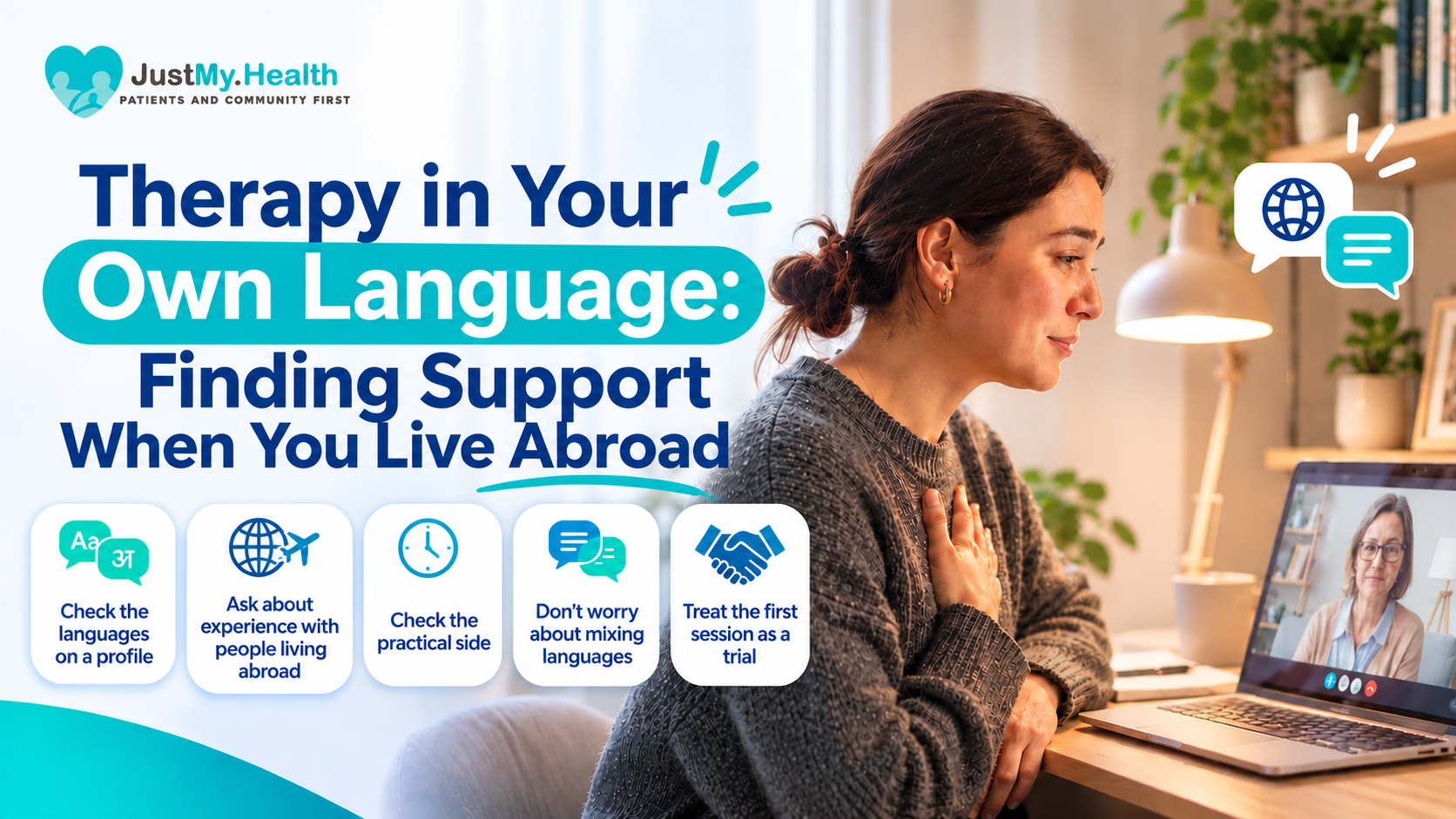
Yes, you can find therapy in your own language, wherever you live. Check the languages on a therapist's profile and ask how fluent they are, ask about experience with people living abroad, check the practical side, and treat the first session as a trial.
Living far from home can be exciting, and it can also be lonely, especially when the language you feel things in is not the one you use all day. This guide explains why language matters in therapy, five steps for finding support in your own language, and what to do if you cannot find it.
Why Does Language Matter in Therapy?
Many people find it easier to explain feelings, jokes and sayings in the language they grew up with. Some words simply do not translate, and the exact word for how you feel may only exist in your own language. Speaking in it can make opening up feel more natural, and it can save you from translating in your head while you try to explain something difficult.
Being fluent in a second language does not always mean it feels like home. Many people live their working lives in one language and their inner lives in another.
How to Find a Therapist Who Speaks Your Language
🗣️
Check the languages, and ask about fluency
Look at the languages listed on a therapist's profile. Then ask how fluent they are: native, fluent, or conversational? Conversational may be fine for everyday topics, but harder for deep feelings.
Try asking: "Do you feel comfortable discussing difficult emotions in this language?"
🧭
Ask about experience with people living abroad
Homesickness, culture shock, being far from family and building a new life are common experiences. A good therapist will understand them, or be willing to learn.
Try asking: "Have you worked with people who have moved to a new country?"
🌍
Check the practical side
Which time zone will sessions be in, and will it suit your day? Can this therapist work with someone in the country where you live? The rules differ between countries and professional bodies, so always ask, and do not assume.
Try asking: "Are you able to work with someone who lives in my country?"
💬
Do not worry about mixing languages
If a word only fits in your own language, say it. A good therapist will ask what it means, and that explanation is often useful in itself. Mixing languages is very common for people who live between two.
Try saying: "There isn't really a word for this in English, but it means..."
🤝
Treat the first session as a trial
Do you feel understood and relaxed? That is a good sign. If not, it is fine to try someone else. Finding the right fit can take time, and our post How to Choose the Right Therapist for You can help.
Try this: afterwards, note whether you were able to say what you really meant.
Check where a therapist can practise. Rules about working with someone in another country depend on the therapist's registration and on local rules. A therapist may be able to work with you in some places and not others. Ask before you book, and do not assume.
What Does It Look Like in Practice?
Here is an illustrative example. It is not a real case.
Elena's situation
Elena moved abroad for work three years ago. Her English is good, but when she tries to talk about her mother's illness back home, she keeps reaching for words in Portuguese that she cannot translate. She ends up saying less than she means, and feels more alone afterwards.
What Elena did
✓Looked for therapists who list Portuguese among their languages
✓Asked one of them how fluent she was, and whether she felt comfortable with difficult emotions in Portuguese
✓Checked the time zone, and that the therapist could work with someone living in her country
✓Used the first session as a trial, and noticed that she could finally say what she meant
✓Mixed English and Portuguese freely, and let her therapist ask about words she used
What made the difference: checking fluency and the practical details before booking, and treating the first session as a trial. Elena did not need a perfect match, only a therapist she could be fully herself with.
Questions to Ask Before You Book
A good therapist will be glad to answer these. It helps to ask:
✓How fluent are you in my language?
✓Do you feel comfortable discussing difficult emotions in it?
✓Have you worked with people who live abroad?
✓Can you work with someone who lives in my country?
✓Which time zone are sessions in?
✓Is it okay if I mix languages during sessions?
Be cautious if a profile lists many languages but the therapist cannot hold a comfortable conversation in them, or if anyone guarantees results. Ask directly, and trust how the first conversation feels.
What If You Cannot Find Your Language?
🔎
Look for curiosity and experience
A therapist who has worked with people from many backgrounds, and who asks rather than assumes, can still help. Our post Finding a Therapist Who Understands Your Culture and Background explains what to look for.
📝
Bring your own words
Jot down a few words or phrases in your own language that capture what you are feeling, and share them. A good therapist will want to learn what they mean.
🏡
Keep your roots close
Calls home, friends who share your language, and community or cultural groups can all help, alongside therapy. They are not a replacement for professional support, but they matter.
Feeling Homesick Is Common
Homesickness and culture shock are very common when you move, and they can come and go, even years later. If low mood or worry lingers, or starts to affect your sleep, work or relationships, it may be a good time to talk to a therapist or your doctor. You do not need to wait until it feels serious.
Frequently Asked Questions
Is it better to have a therapist who speaks my language?
For many people it helps, because it can be easier to express feelings in the language they grew up with. But it is not essential for everyone. Some people prefer a different language for privacy, or because it gives them distance.
Can a therapist in another country work with me?
It depends on the therapist's registration and on local rules, which differ between countries and professional bodies. Always ask before you book.
Can I do therapy in two languages?
Often, yes. Many people switch between languages, and some therapists welcome it. Tell your therapist what you would like, and ask whether it works for them.
What if my therapist's fluency is not as good as I hoped?
Say so, kindly and directly. You can ask whether sessions suit you, or look for someone else. Changing therapist is not a failure, and our post It's Okay If Therapy Isn't Working, Here's What to Do explains how.
Is online therapy private when I live abroad?
It can be, with a private space, your own device and a private connection. Our post Is Online Therapy Private? How to Protect Your Sessions has the steps.
If you have recently moved, take a minute to find out your local emergency number, because it may differ from the one you know. Online therapy is not an emergency service. If you are in crisis or need urgent help, please contact your local emergency services.
Related reading
To find someone who understands you, read Finding a Therapist Who Understands Your Culture and Background.
To check it works for you, read Does Online Therapy Work as Well as In-Person?
To get ready, read How to Prepare for Your First Therapy Session.
To make the most of it, read How to Get the Most Out of Therapy.
Watch the Full Video
Sometimes it helps to see it, not just read it. Our short video walks through the five steps in 90 seconds.
▶ Watch the video
Looking for a therapist who speaks your language?
At JustMy.Health, therapists list the languages they practise in, so you can check each profile before you book.
Create an account
Ask us a question
If you are in crisis or need urgent help, please contact your local emergency services.