It's not just a courtesy, it's a professional, ethical, and legal responsibility your therapist holds. And it's often the thing that makes it possible to actually be honest in the room.
For a lot of people, uncertainty about privacy is one of the biggest things standing between them and starting therapy. So here's what confidentiality actually means in practice.
What Confidentiality Actually Means
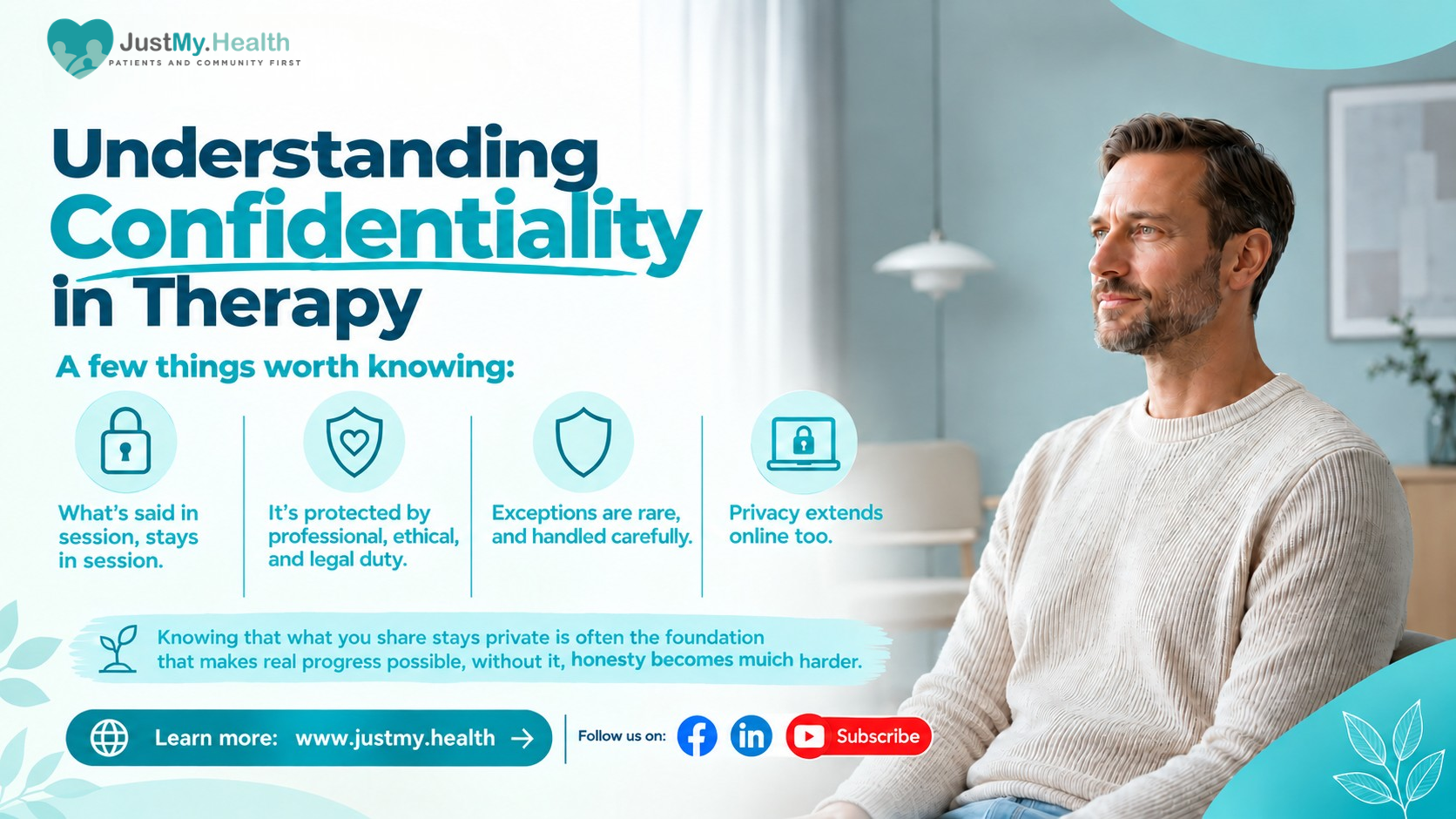
🔒 What's said in session, stays in session. Your therapist can't share what you discuss without your consent, it's not a professional courtesy, it's a binding obligation
⚖️ It's protected by professional, ethical, and legal duty. This isn't optional or informal, it's a core responsibility every qualified therapist operates under, enforced by their governing professional body
🛡️ Exceptions are rare and handled carefully. In situations where safety is genuinely at risk, to yourself or someone else, any necessary disclosure is handled transparently, with you informed wherever possible, not behind your back
🔐 Privacy extends online too. Encrypted sessions and secure messaging mean confidentiality follows you, wherever you're connecting from
Knowing that what you share stays private is often the foundation that makes real progress possible. Without that assurance, honesty becomes much harder, and honesty is really where therapy starts to work.
Watch the Full Video
Sometimes it helps to see it, not just read it. Watch our quick video on understanding confidentiality in therapy.
At JustMy.Health, your privacy is built into everything we do.